Rising Fuel Costs Are Eating Into Rental Margins. Are You Recovering Every Dollar?
May 18, 2026
.webp)
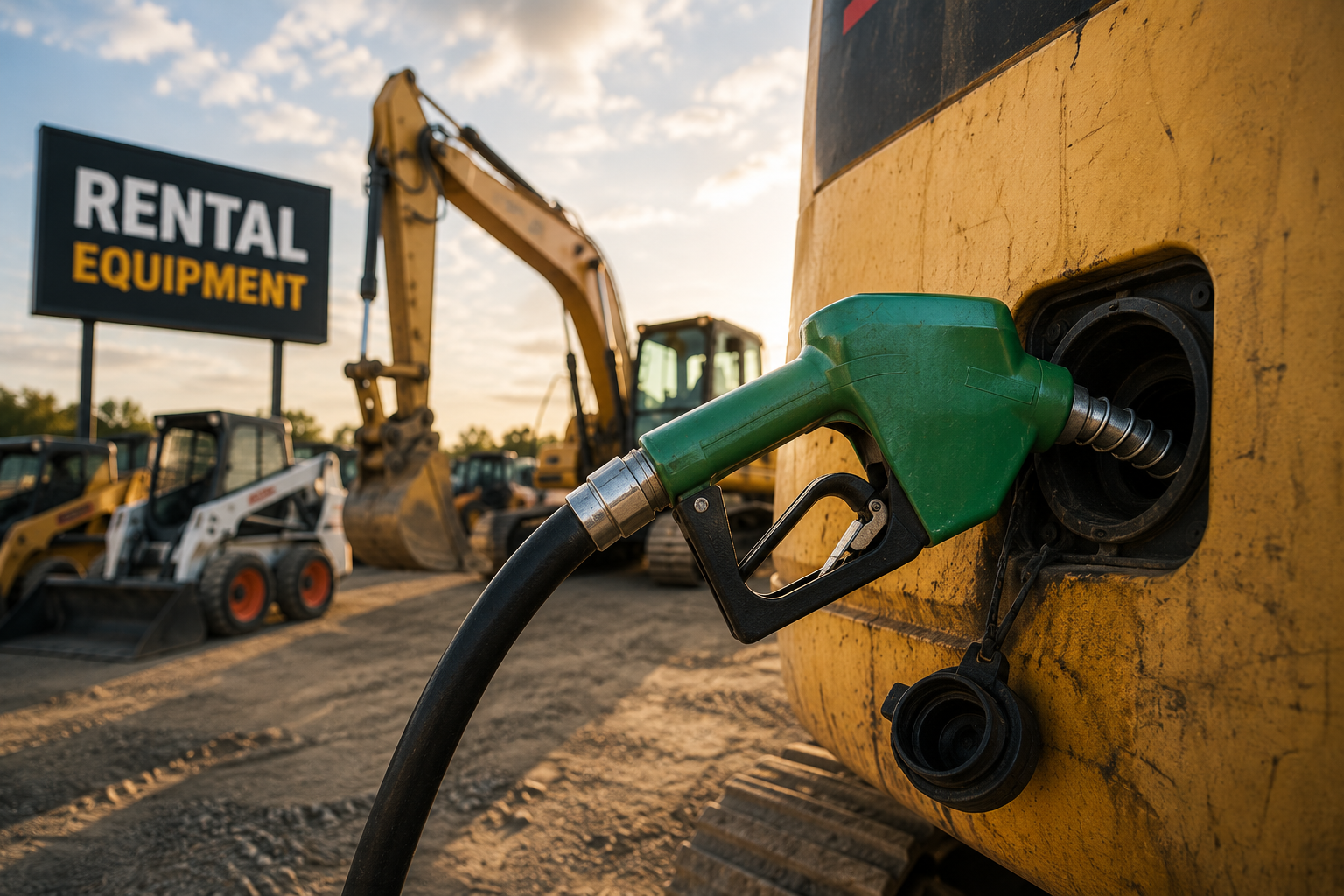
Why Fuel Recovery Matters More Than Ever
Fuel has always been a significant operating cost for equipment rental companies. But when global events create sudden shocks in energy markets, fuel management becomes even more critical.
Recent geopolitical tensions, including the ongoing conflict in the Middle East, have added uncertainty to global oil markets and increased the risk of sharp price swings in diesel, gasoline, and propane. Even if prices do not spike overnight, periods of instability can materially increase operating costs and compress margins.
For rental businesses, that means every missed fuel charge becomes more expensive.
A skid steer returned half empty might represent a $25 charge. A large excavator could consume more than $200 of diesel on a single rental. If those charges are missed, estimated incorrectly, or underbilled, the costs are absorbed directly by your business.
And because each missed charge may seem small in isolation, the financial impact often goes unnoticed.
Consider a rental company with:
- 1,500 rentals per year
- Average missed fuel charge of $35
- Fuel charges missed on just 25% of rentals
That results in:
1,500 × 25% × $35 = $13,125 in annual lost revenue
For larger rental businesses, the impact can easily reach tens of thousands of dollars each year. At Renterra, we recently launched a major upgrade to our fuel management capabilities to help rental companies accurately capture fuel usage, automate billing, and ensure every gallon consumed is billed correctly.
Fuel costs affect nearly every segment of the rental industry:
- Diesel for excavators, dozers, and skid steers
- Gasoline for smaller tools and equipment
- Propane for heaters and forklifts
- Transportation costs associated with deliveries and pickups
When fuel prices are stable, small inefficiencies may go unnoticed. But when markets become volatile, those inefficiencies have a much larger impact on profitability. In uncertain times, rental companies need confidence that:
- Fuel usage is captured accurately
- Charges reflect actual consumption
- Billing rates can be adjusted quickly
- No recoverable revenue slips through the cracks
Common Fuel Management Mistakes
Many rental companies still rely on manual or inconsistent processes. Common issues include:
- Fuel levels not recorded at checkout or delivery
- Fuel levels not recorded upon return
- Employees estimating usage
- Missing or inaccurate tank capacity data
- Charges added manually and forgotten
- Lack of accountability across the yard and front counter
These small process breakdowns add up quickly.
Why Customers Expect Accurate Fuel Billing
Most customers have no issue paying for the fuel they consume. Problems arise when charges appear arbitrary or unsupported.
Clear documentation makes all the difference.
When an invoice shows:
- Starting fuel level
- Ending fuel level
- Quantity consumed
- Price per gallon
customers are far less likely to dispute the charge.
Accurate fuel tracking protects margins while improving trust and transparency.
Fuel Tracking Methods Used by Rental Companies
Track by Percentage of Tank
In this method, employees record the fuel level at check-out and again at check-in as a percentage of the tank, such as 100%, 75%, or 50%.
The system then uses the unit's stored fuel tank capacity to calculate the quantity consumed.
For example:
- Fuel tank capacity: 80 gallons
- Check-out level: 100%
- Check-in level: 60%
- Fuel consumed: 32 gallons
Pros
- Fast and intuitive for yard staff
- Matches what employees see on the machine's fuel gauge
- Automatically converts percentages into gallons or liters
- Works well across nearly all equipment types
Considerations
- Requires accurate tank capacity data
The good news is that modern software can help automate this. Renterra uses AI to identify likely fuel tank capacities based on equipment make and model, making setup much faster and more accurate.
Track by Gallons or Liters
In this method, fuel is tracked directly in gallons or liters.
This can be done by:
- Entering the number of gallons required to refill the machine
- Calculating the difference between the quantity recorded at check-out and check-in
Pros
- Highly precise when exact refill quantities are known
- Ideal when using fuel receipts or pump readings
- Can still be calculated automatically by the system
Considerations
- Not always practical if staff do not have a reliable way to measure exact quantities
Both methods are effective, and the best rental software supports whichever approach fits your operation.
Building a Well-Oiled Fuel Recovery Process
A strong fuel management process delivers benefits well beyond additional revenue.
- Improved Profitability: Every gallon consumed is billed accurately.
- Faster Check-In: Return inspections become more standardized and efficient.
- Fewer Billing Disputes: Customers can clearly see how charges were calculated.
- Better Operational Data: Fuel usage trends can reveal inefficiencies and maintenance issues.
- Stronger Accountability: Yard and service teams follow a consistent process every time.
Best Practices for Fuel Management
- Store Tank Capacity for Every Unit: Each asset should include fuel capacity information.
- Capture Fuel at Check-Out and Check-In: Consistent documentation is the foundation of accurate billing.
- Automate the Calculations: Eliminate manual math and reduce mistakes.
- Add Charges Automatically: Fuel fees should flow directly into the rental contract and invoice.
- Review Exceptions: Audit rentals where fuel was not captured or billed.
How Renterra Automates Fuel Billing
Renterra's new fuel enhancements were built specifically for equipment rental businesses.
Flexible Tracking Options
Track fuel by:
- Percentage of tank
- Gallons or liters
- Propane quantity
- Unit-Level Fuel Capacity: Store the tank size for every piece of equipment and let the system calculate actual usage automatically.
- AI-Powered Capacity Lookup: Use AI to identify likely tank capacities based on manufacturer and model information.
- Check-Out and Check-In Fuel Capture: Yard staff can record fuel levels directly within dispatch and return workflows.
- Automatic Billing: When equipment is returned, fuel charges are automatically added to the rental totals.
- Complete Audit Trail: Every starting level, ending level, quantity, and charge is stored for future reference.
See Fuel Charges Added Automatically
In the example above, fuel information captured during the rental process flows directly into the billing summary and final invoice. No manual calculations. No forgotten line items. No lost revenue.
Example: Fuel Billing in Action
A Caterpillar 320 Excavator has a 120-gallon fuel tank.
- The machine leaves the yard at 100% fuel.
- It returns at 65%.
- Renterra calculates that 42 gallons were consumed.
- Your configured diesel rate is applied automatically.
- The fuel charge is added to the contract and invoice.
The process takes seconds and ensures every recoverable dollar is captured.
Ready to Tighten Up Fuel Recovery?
Renterra helps equipment rental companies automate fuel tracking, eliminate missed charges, and improve margins. If you'd like to see our new fuel features in action, request a demo and discover how much revenue your business may be losing today.
Let’s make rentals easier
See how Renterra helps you work faster, get paid quicker, and keep your team on the same page.